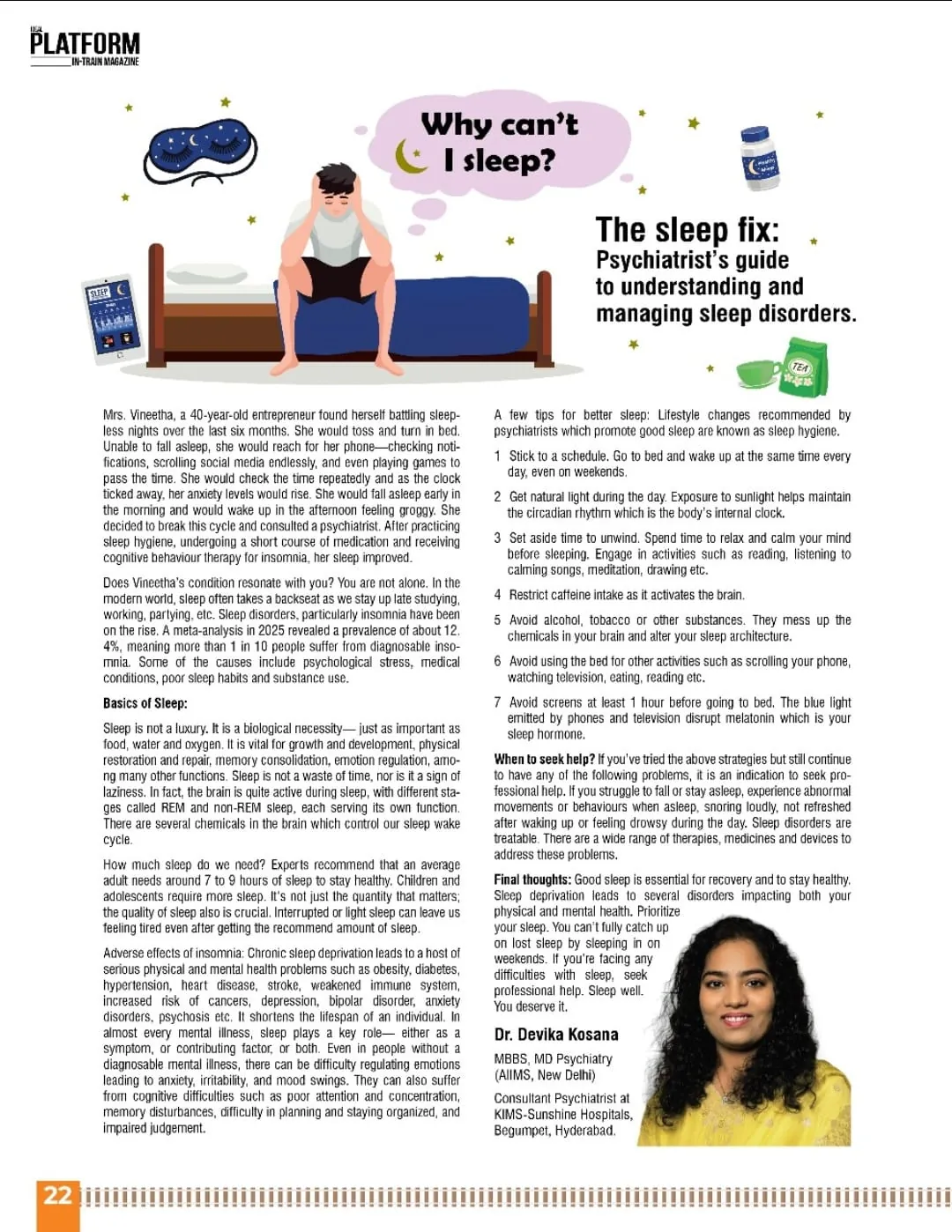
Mrs. Vineetha, a 40-year-old entrepreneur found herself battling sleepless nights over the last six months. She would toss and turn in bed. Unable to fall asleep, she would reach for her phone—checking notifications, scrolling social media endlessly, and even playing games to pass the time. She would check the time repeatedly and as the clock ticked away, her anxiety levels would rise. She would fall asleep early in the morning and would wake up in the afternoon feeling groggy. She decided to break this cycle and consulted a psychiatrist.
Does Vineetha's condition resonate with you? You are not alone. In the modern world, sleep often takes a backseat as we stay up late studying, working, partying, etc. Sleep disorders, particularly insomnia have been on the rise. A meta-analysis in 2025 revealed a prevalence of about 12.4%, meaning more than 1 in 10 people suffer from diagnosable insomnia. Some of the causes include psychological stress, medical conditions, poor sleep habits and substance use.
Sleep is not a luxury.
Basics of Sleep:
Sleep is not a luxury. It is a biological necessity— just as important as food, water and oxygen. It is vital for growth and development, physical restoration and repair, memory consolidation, emotion regulation, among many other functions. Sleep is not a waste of time, nor is it a sign of laziness. In fact, the brain is quite active during sleep, with different stages called REM and non-REM sleep, each serving its own function. There are several chemicals in the brain which control our sleep wake cycle.
How much sleep do we need? Experts recommend that an average adult needs around 7 to 9 hours of sleep to stay healthy. Children and adolescents require more sleep. It's not just the quantity that matters; the quality of sleep also is crucial. Interrupted or light sleep can leave us feeling tired even after getting the recommend amount of sleep.
Adverse effects of insomnia: Chronic sleep deprivation leads to a host of serious physical and mental health problems such as obesity, diabetes, hypertension, heart disease, stroke, weakened immune system, increased risk of cancers, depression, bipolar disorder, anxiety disorders, psychosis etc. It shortens the lifespan of an individual. In almost every mental illness, sleep plays a key role— either as a symptom, or contributing factor, or both. Even in people without a diagnosable mental illness, there can be difficulty regulating emotions leading to anxiety, irritability, and mood swings. They can also suffer from cognitive difficulties such as poor attention and concentration, memory disturbances, difficulty in planning and staying organized, and impaired judgement.
A few tips for better sleep: Lifestyle changes recommended by psychiatrists which promote good sleep are known as sleep hygiene.
- Stick to a schedule. Go to bed and wake up at the same time every day, even on weekends.
- Get natural light during the day. Exposure to sunlight helps maintain the circadian rhythm which is the body's internal clock.
- Set aside time to unwind. Spend time to relax and calm your mind before sleeping. Engage in activities such as reading, listening to calming songs, meditation, drawing etc.
- Restrict caffeine intake as it activates the brain.
- Avoid alcohol, tobacco or other substances. They mess up the chemicals in your brain and alter your sleep architecture.
- Avoid using the bed for other activities such as scrolling your phone, watching television, eating, reading etc.
- Avoid screens at least 1 hour before going to bed. The blue light emitted by phones and television disrupt melatonin which is your sleep hormone.
When to seek help? If you've tried the above strategies but still continue to have any of the following problems, it is an indication to seek professional help. If you struggle to fall or stay asleep, experience abnormal movements or behaviours when asleep, snoring loudly, not refreshed after waking up or feeling drowsy during the day. Sleep disorders are treatable. There are a wide range of therapies, medicines and devices to address these problems.
Final thoughts: Good sleep is essential for recovery and to stay healthy. Sleep deprivation leads to several disorders impacting both your physical and mental health. Prioritize your sleep. You can't fully catch up on lost sleep by sleeping in on weekends. If you're facing any difficulties with sleep, seek professional help. Sleep well. You deserve it.
First published in Ideal Platform in-train magazine, August 2025. Reproduced with the permission of the publisher. For the web, printing errors have been corrected and the case examples shortened; the printed page shows the column in full.