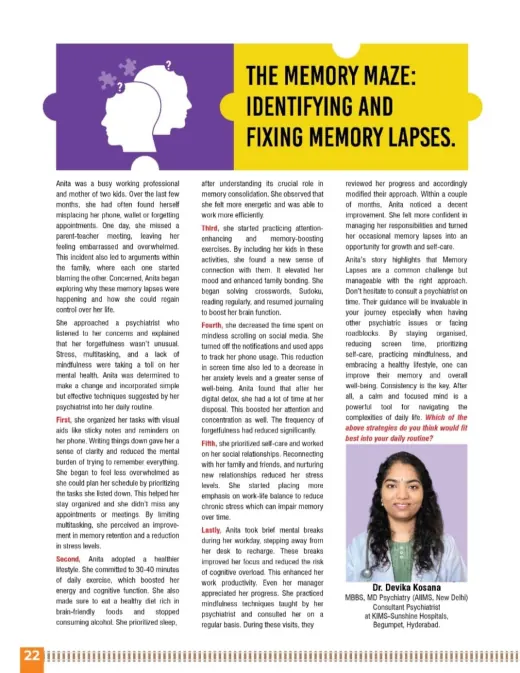
Samuel was a 10-year-old student. For the past year, he had frequently complained of stomach pain or headaches and would refuse to go to school. He would stay at home and spend most of his time playing games on his smartphone or watching television. When his parents took away his phone and asked him to rest, he would shout and hit them. His parents were concerned about his unacceptable behaviour, poor attendance, and falling grades. They also received negative feedback from his teachers about his unsatisfactory academic performance. The teachers advised them to take Samuel to a psychiatrist. The child revealed to the psychiatrist that he was unable to understand what his teachers taught him at school and was struggling to prepare for his exams. His teachers scolded him for not completing his notes and for his poor scholastic performance. As a result, he avoided school, citing poor health. After a detailed assessment, he was diagnosed with a learning disorder called dyslexia and was started on remedial training. His parents discussed his learning difficulties with the teachers.
Ananya was a 13-year-old girl whose family had recently moved to a new city, and they enrolled her in a new hostel. Ananya frequently cried and complained of feeling weak and unable to concentrate, and she asked her parents to take her back home. When she was at home, she would read for a while but would get tired very easily. She stopped talking to her family members and wasn't interested in watching television. She also wasn't eating or sleeping well. Her parents consulted a psychiatrist, who found that Ananya was being bullied by her classmates and was also suffering from depression. Her parents also discussed her situation with the principal, and the students who had been bullying her were warned to change their behaviour.
Though all the children refused to go to school, their presentations, reasons, and durations of school refusal differed.
Aditi was a 15-year-old girl who had not been attending school regularly since 3rd class. After the COVID-19 pandemic, she completely refused to go to school. She would spend the entire day with her smartphone and spoke of harming herself whenever her parents insisted she attend school. Since the problem had been ongoing for nearly 10 years and was worsening, her parents sought help from a psychiatrist. After thorough assessments and intensive treatment, Aditi made minimal progress. Even after 6 months of treatment, she still refused to go to school.
Though all the children refused to go to school, their presentations, reasons, and durations of school refusal differed. The common reasons for school refusal include difficulty with academics, lack of interest in studies, not having friends, bullying, psychiatric disorders, family conflicts, and changing schools. If left unaddressed, school refusal can lead to significant long-term consequences for a child, such as academic decline, social isolation, and emotional problems. Aditi's case also highlights that if the problem is ignored and persists for a long time, recovery may not be adequate. Therefore, it's important not to hesitate in seeking help from a psychiatrist if you suspect your child is struggling. Signs to watch for include frequent complaints of body pain, often falling ill, refusal to attend school, crying, temper tantrums, irritability or anxiety, hiding, not getting ready on time, or excessive complaints about teachers or classmates etc.
School refusal is a complex and challenging issue, but with early intervention, appropriate support, and a collaborative approach, many students can overcome it. It's a significant and growing concern among children and adolescents and is a symptom of deeper issues that require attention. Addressing the root causes, promoting proper communication, and teaching problem-solving skills are crucial to helping them regain their confidence. Timely consultation with a psychiatrist and regular follow-ups are essential for their recovery. Parental support and accommodation from the school play a significant role in reintegrating the child back into school.
If a child or teenager talks about harming themselves, take it seriously and get help the same day. In India, Tele-MANAS on 14416 is free and open day and night, or go to the nearest emergency department.
First published in Ideal Platform in-train magazine, April 2025. Reproduced with the permission of the publisher. For the web, printing errors have been corrected and the case examples shortened; the printed page shows the column in full.